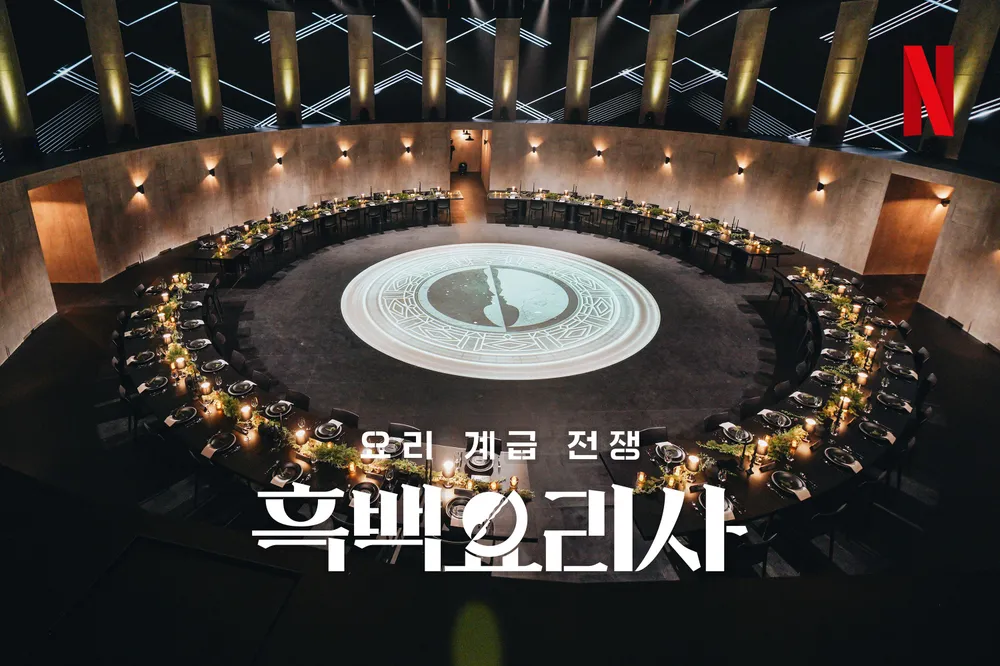
Netflix’s Korean cooking competition “Culinary Class Wars” (흑백요리사) has become a cultural phenomenon, breaking records and reshaping Korea’s food industry.
The Format That Changed Everything
The show’s genius lies in its “Black Spoon vs. White Spoon” concept. Twenty elite celebrity chefs (“White Spoons”) compete against 80 underground culinary talents (“Black Spoons”) — home cooks, small restaurant owners, and unrecognized professionals. The twist? Identities stay hidden during blind tastings, letting skill alone decide winners.
This format struck a nerve in Korea’s highly hierarchical society, where credentials often overshadow actual ability.
Record-Breaking Numbers
Season 1 (September 2024) became the first Korean variety show to top Netflix’s global non-English TV charts for three consecutive weeks. It later won the Grand Prize at the 61st Baeksang Arts Awards — a first for any variety program.
Season 2, released December 16, 2025, matched its predecessor immediately: 5.5 million views in its first week, claiming the #1 spot in the global non-English TV category. Netflix Korea’s daily active users surged to 4.05 million, the highest since Squid Game Season 3.
Real Economic Impact
The show didn’t just entertain — it moved markets:
- Restaurant bookings exploded: Catch Table, Korea’s top reservation app, created a dedicated “Culinary Class Wars” section. Some contestants’ restaurants hit 10,000+ waitlist entries.
- Retail collaborations: Convenience store chains (CU, GS25) and food brands launched chef-branded products within weeks of episodes airing.
- Chef IP became valuable: Contestants like “Napoli Matfia” and “Triple Star” turned TV fame into frozen meal lines and franchise deals.
What Makes It Work
Unlike Western cooking shows that emphasize drama and conflict, Culinary Class Wars focuses on technique and storytelling. Judges Baek Jong-won (Korea’s most famous restaurateur) and Ahn Sung-jae (two-Michelin-star chef) provide detailed, professional critiques rather than theatrical reactions.
The cinematography also stands out — slow-motion plating shots and ingredient close-ups have become viral TikTok content, driving organic discovery.
The Controversy Factor
Season 2 arrived amid controversy surrounding judge Baek Jong-won, whose restaurant empire faced fraud allegations in early 2025. Producers responded by minimizing his screen time and focusing on cooking itself. So far, audiences seem to separate the show from its host’s troubles.
Why It Matters Beyond Korea
Culinary Class Wars proves Korean entertainment can export formats, not just content. A Chinese knockoff (“一饭封神”) already appeared on Tencent Video, copying everything from the black-white concept to specific camera angles — prompting Netflix to consider legal action.
For global viewers, the show offers a window into Korean food culture: the precision of jeon (Korean pancakes), the art of bossam, and why Koreans take lunch seriously (the show references the cultural benchmark of a 10,000-won lunch, roughly $7 USD).
Bottom line: Culinary Class Wars isn’t just a hit — it’s a case study in how streaming content can drive real-world commerce and redefine a genre.