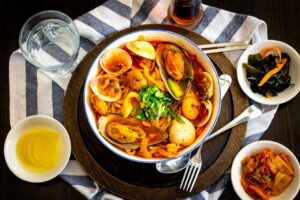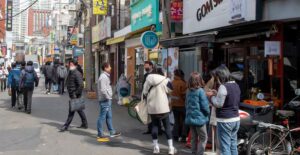
Say it like a local: thank you for the food in Korean 🍚🙏🇰🇷
Learning simple table phrases like “thank you for the food” in Korean opens doors — and stomachs. In 2026, with trends like Korean New Year food, bibimbap’s global popularity, the rise of food delivery in Korea for foreigners, and renewed interest in traditional Korean food, knowing how to express gratitude at the table is both practical and culturally meaningful.
Core phrases: before and after eating
In Korean, gratitude around meals is built into short, polite phrases. Here are the essentials you’ll hear and should try.
1) 잘 먹겠습니다 (Jal meokgetseumnida) — before eating
Pronunciation: jal-muhk-get-seum-ni-da
Meaning: “I will eat well.” Used before you start eating to thank the host or cook. This is the most common and respectful phrase to use in restaurants, homes, and communal meals.
Example: When a server sets down your bibimbap, say: 잘 먹겠습니다. (Jal meokgetseumnida.)
2) 잘 먹었습니다 (Jal meogeotseumnida) — after eating
Pronunciation: jal-muhk-uh-sseum-ni-da
Meaning: “I ate well” or “Thank you for the meal.” Say this after finishing your meal to show appreciation for the food and the cook’s effort.
Example: At the end of a family Seollal (Korean New Year) meal of tteokguk, say: 잘 먹었습니다. (Jal meogeotseumnida.)
3) 맛있게 드세요 / 맛있게 드셨나요? — to someone else
Pronunciation: ma-sit-geh deu-se-yo / ma-sit-geh deu-syeoss-na-yo?
Meaning: “Enjoy your meal” / “Did you enjoy your meal?” Use when offering food to others or when leaving a tip of encouragement.
4) Informal / casual forms
Close friends or younger people might use: 잘 먹을게 (Jal meogeulge) before, and 잘 먹었어 (Jal meogeosseo) after. Only use these with people you are comfortable with.
Why these phrases matter: cultural context
Literal translations like “I will eat well” reflect the Confucian-infused respect for food and those who prepare it. Saying 잘 먹겠습니다 before a meal acknowledges that someone else took time and care to make the food. Saying 잘 먹었습니다 afterward expresses gratitude and respect.
During Korean New Year (Seollal) and Chuseok, these phrases are especially important. Traditional Korean food like tteokguk (rice cake soup), japchae, and an array of banchan are served to honor family and ancestors; thanking the elders and those who cooked is part of the ritual. When enjoying trending dishes like bibimbap at special gatherings, the same etiquette applies.
Practical tips for foreigners in Korea
At restaurants
– Before the server brings the first bite, a simple 잘 먹겠습니다 will be appreciated (even if quietly said).
– When you leave, say 잘 먹었습니다 or simply 감사합니다 (gamsahamnida — thank you) to the staff. Tipping is not customary in Korea, so verbal thanks matter more.
At a Korean home or when dining with elders
– Use the formal versions: 잘 먹겠습니다 / 잘 먹었습니다. If elders cooked, also say 감사합니다 or 수고하셨어요 (sugohasyeosseoyo — “thank you for your effort”).
– Bow slightly when saying these phrases; a small nod shows respect.
Street food & markets
For vendors and delivery riders, a cheerful 감사합니다 or 잘 먹겠습니다 is fine. For small purchases, a smile and “감사합니다!” goes a long way.
Food delivery in Korea for foreigners
With food delivery apps now supporting multiple languages, many foreigners still crave local politeness. When your food arrives, say 감사합니다 to the delivery rider; they work quickly and appreciate the respect. If leaving a review, you can write: “잘 먹었습니다 — thank you!” to show local knowledge and good manners.
Phrase usage by scenario — quick examples
Here are short, ready-to-use lines you can copy into your notes or phone:
- Before eating at a restaurant: 잘 먹겠습니다. (Jal meokgetseumnida.)
- After finishing dinner at a home: 잘 먹었습니다. 정말 맛있었어요. (Jal meogeotseumnida. Jeongmal masisseosseoyo.) — “Thank you for the meal. It was really delicious.”
- When a friend invites you: 초대해 주셔서 감사합니다. 잘 먹겠습니다. (Chodaehae jusyeoseo gamsahamnida. Jal meokgetseumnida.)
- To a delivery rider: 감사합니다! 잘 먹겠습니다. (Gamsahamnida! Jal meokgetseumnida.)
Pronunciation tips & practice
– Break phrases into syllable chunks: jal / meok / get / seum / ni / da.
– Keep your tone polite and neutral; Korean politeness level matters more than loudness.
– Watch K-dramas or cooking shows to hear natural usage — this helps with rhythm and intonation.
Why this matters now — trends in 2026
In 2026, interest in K-food and dining etiquette is high. Bibimbap remains a global favorite, while traditional Korean New Year foods are trending every January as expatriates and travelers seek authentic experiences. Food delivery in Korea for foreigners has improved with translation features, but the cultural touch — using a simple 잘 먹겠습니다/잘 먹었습니다 — bridges language gaps and makes interactions friendlier.
Quick cheat sheet — save or screenshot!
- Before eating (formal): 잘 먹겠습니다. — I will eat well.
- After eating (formal): 잘 먹었습니다. — Thank you for the meal.
- Informal before: 잘 먹을게. — I’ll eat well (casual).
- Thank you (general): 감사합니다. — Thank you.
- To the cook: 수고하셨어요. — Thank you for your hard work.
Final tips
Using these phrases shows respect and cultural awareness — whether you’re tucking into a steaming bowl of bibimbap, joining a Seollal gathering, or ordering late-night delivery. Try them next time you dine in Korea or at a Korean friend’s home. Even a short, sincere 잘 먹겠습니다 or 잘 먹었습니다 can make your meal more meaningful. 🍽️❤️
Want more K-food etiquette and phrase guides? Share this post, save the cheat sheet, and check our other guides on Korean New Year food, bibimbap tips, and navigating food delivery in Korea for foreigners. 감사합니다 — and bon appetit! 🎉
Photo by George Dolgikh on Pexels